
At Drill King International, we’ve been engineering and supplying DTH drilling equipment for over four decades. We’ve seen what happens when operators match the right method to the job – and what happens when they don’t. This guide cuts through the noise and gives you a clear, honest picture of both drilling methods, their strengths, their limitations, and exactly when to reach for one over the other.
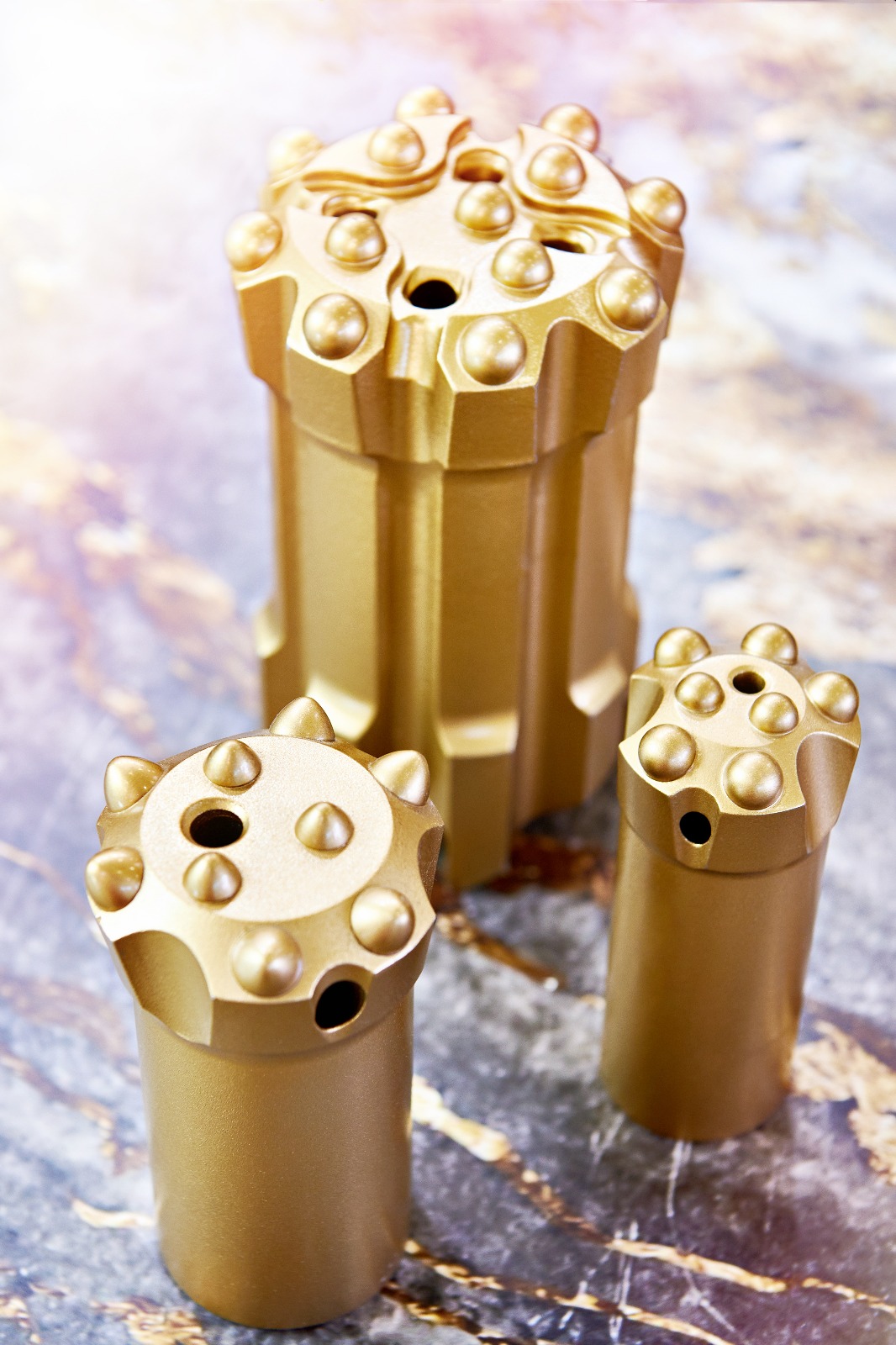
Understanding the difference between DTH and Rotary drilling starts with one fundamental question: where does the energy go, and how does it reach the rock?
DTH (Down-the-Hole) drilling places the hammer at the very bottom of the drill string, sitting directly behind the drill bit. Compressed air drives a piston inside the hammer at high frequency, delivering powerful percussive blows straight to the bit face. Because the impact energy is generated at the point of contact, virtually none of it is lost travelling down the drill string. The same compressed air that powers the hammer also carries cuttings back up the borehole, keeping the hole clean and the bit working efficiently. The result is a system that delivers consistent, high-energy impact regardless of depth – which is precisely why DTH dominates in hard rock environments.
Rotary drilling works on an entirely different principle. Energy is generated at the surface and transmitted downward through a rotating drill string. The bit – typically a tricone roller cone or a PDC (polycrystalline diamond compact) bit – grinds, scrapes, or crushes the formation using a combination of rotational torque and weight-on-bit (WOB). Drilling fluid, whether water-based mud, air, or another medium, is circulated down the pipe and back to surface to cool the bit and flush cuttings. Rotary rigs are versatile machines: they can handle everything from loose overburden to moderately hard rock simply by changing the bit and adjusting fluid parameters.
The core mechanical distinction is percussive impact (DTH) versus rotational grinding (rotary). Everything else – performance, cost, application suitability – flows from that single difference.
This is where the two methods diverge most dramatically, and it’s where operators make or lose money.
In hard, competent rock – granites, quartzites, basalts, volcanic formations, and similar high-UCS (Unconfined Compressive Strength) materials – DTH drilling is the clear winner. The hammer’s percussive action fractures the rock rather than grinding through it. Fracturing is far more energy-efficient than abrasion when you’re dealing with brittle, crystalline formations. Penetration rates in hard rock with a well-matched DTH hammer and button bit can be two to three times faster than an equivalent rotary setup, while bit wear is proportionally lower.
Rotary drilling, on the other hand, is genuinely faster in soft to medium formations – clays, sands, silts, softer limestones, and sedimentary sequences. High rotation speeds with the right bit geometry can achieve excellent penetration rates in these materials, and the continuous nature of rotary action suits formations where percussive impact would be less effective or would cause unwanted hole instability. This is why rotary methods dominate oil and gas drilling, where deep wells often pass through thousands of metres of relatively soft sedimentary rock.
The crossover point – where DTH starts outperforming rotary – typically sits around 80–100 MPa UCS. Below that threshold, rotary competes well. Above it, DTH increasingly wins on every metric that matters to a project manager: rate of penetration, bit life, and cost per metre drilled.
Depth capability is one of the more nuanced areas of this comparison, and it’s often misunderstood.
DTH drilling maintains consistent performance as depth increases because the hammer is at the bottom of the hole – energy transmission efficiency doesn’t degrade with string length. For hard rock applications like water well drilling, blast hole drilling in deep benches, and foundation drilling, DTH can go well beyond 1000 ft (300 metres) while maintaining excellent penetration rates and, critically, excellent hole straightness.
Rotary drilling, in contrast, is theoretically capable of the greatest depths – oil and gas rotary wells regularly reach 16,500 ft (5,000 metres) or beyond – but this is achieved with sophisticated bottom-hole assembly engineering and heavyweight drill collars to maintain WOB, not with simple surface-driven rotation. For the types of depth ranges relevant to mining, construction, and water well work say up to 1000-1650 ft (300–500 metres), DTH is competitive and often superior in hard rock.
On hole diameter, the picture is different. DTH excels across a wide range – Drill King’s DTH air hammers cover 2″ to 24″ and our DTH button bits span 2 ¾”- 42” (70mm to 1,067mm). Rotary drilling with large tricone bits or PDC bits is better suited to very large-diameter holes, particularly in the oil and gas sector.
Borehole straightness and quality is where DTH has a meaningful edge in hard ground. The bottom-hole hammer assembly keeps the bit aligned and working consistently, minimising deviation. Straight, clean boreholes matter enormously in blast hole patterns (inaccurate holes disrupt fragmentation results), foundation piling (structural load paths depend on accurate placement), and water well construction (casing installation becomes problematic in deviated holes).
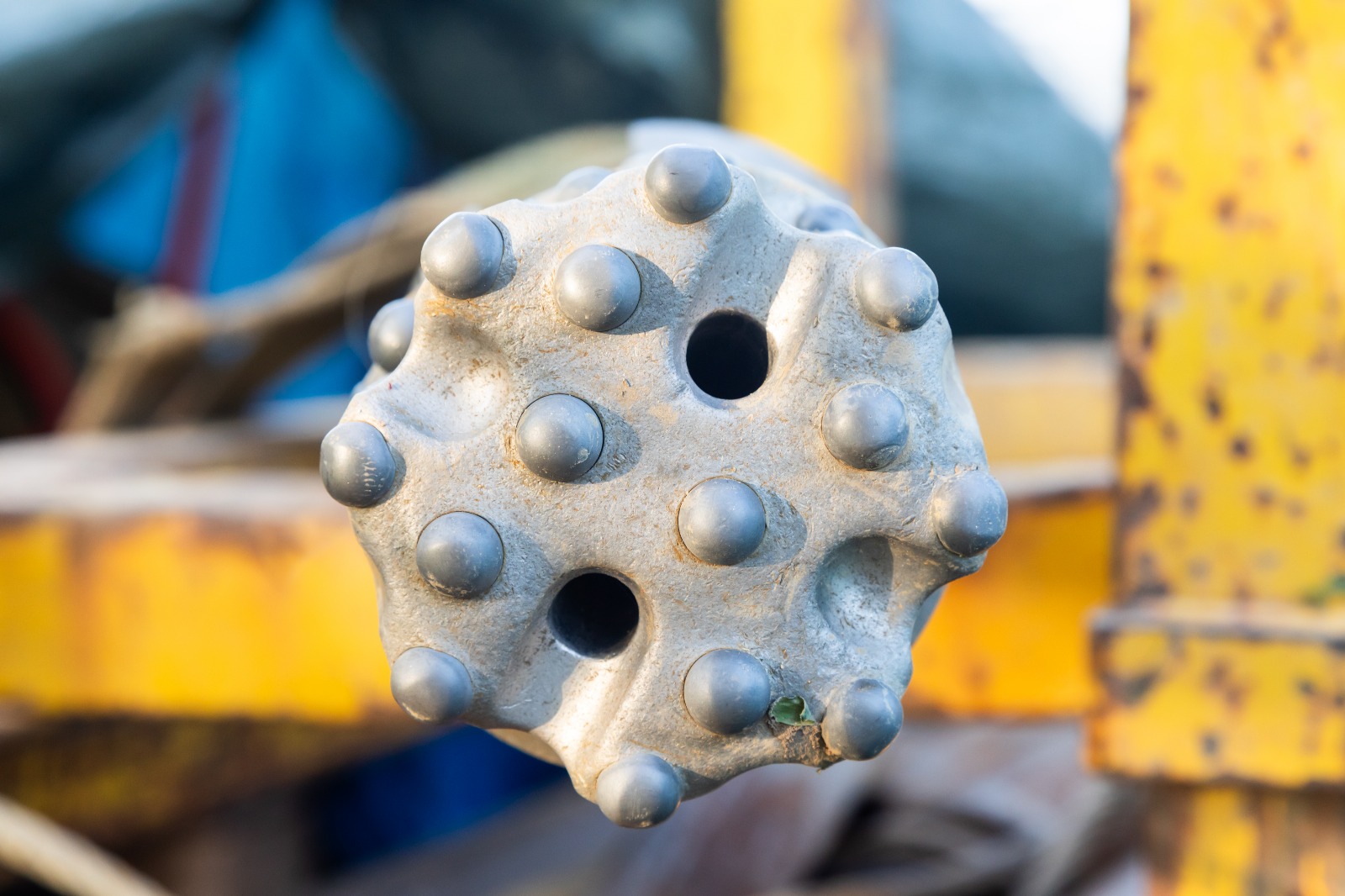
Capital costs often dominate the early conversation, but they’re rarely the most important number. What actually drives project economics is cost per metre drilled.
DTH equipment – hammers, bits, compressors – requires higher upfront investment than a basic rotary setup. The compressed air supply alone is a significant capital line. But in the right geology, DTH’s higher penetration rates and longer bit life in hard rock produce a dramatically lower cost per metre. Fewer rod trips, less bit replacement, and faster completion all compound.
Rotary drilling has lower initial outlay, simpler maintenance logistics in many configurations, and lower consumable costs in soft ground. But put a rotary bit into a 200 MPa granite formation and the economics invert rapidly – short bit life, slow penetration, and high energy consumption make rotary genuinely expensive in hard rock.
The honest answer is that cost comparisons without knowing the geology and project depth are almost meaningless. What Drill King always recommends is running a cost-per-metre analysis with your specific ground conditions plugged in before committing to either method.
DTH drilling generates less surface disturbance because the percussive work happens downhole. There’s no large mud system to manage (in air-flush DTH applications), which simplifies site logistics and reduces environmental footprint – relevant for projects in sensitive areas or where fluid management is a regulatory concern.
Rotary drilling with water-based or synthetic mud systems introduces fluid management obligations: containment, treatment, and disposal of drilling mud. In remote locations, fluid supply logistics can add meaningful cost and complexity.
Noise is another factor. DTH rigs operating with good muffling are generally quieter than large rotary rigs with high-torque surface drives – worth considering for urban geotechnical or construction projects near sensitive receptors.
Drill King International has been helping drilling operations make that call for over four decades. Our DTH air hammers cover 2″ to 24″, our custom button bits span 2¾” to 42 (70mm-1,067mm) “, and our technical team carries the kind of field experience that comes from supplying tools to mining, water well, construction, geothermal, and exploration operations worldwide. If you’re evaluating methods for an upcoming project or looking to optimise an existing operation, request a quote or contact our team – we’ll help you drill smarter.